Philadelphia Is a Mess. I Still Want to Own It.
“The small landholders are the most precious part of a state.”
“Property is the fruit of labor; property is desirable; is a positive good in the world.”
I’ve been too pessimistic lately.
If you’ve been reading The Row Report, you’ve heard me go on about Philadelphia’s new laws, the regulations we’re up against, expenses outpacing rents, and the bad decisions our leaders keep making that I believe will diminish the prosperity of this city. I’ve painted a pretty sad picture of owning rental real estate here.
I sat back recently and thought: that really isn’t fair. It isn’t the whole truth, and it certainly doesn’t reflect how I feel about owning real estate.
Let me be clear about what I mean. Owning quality Philadelphia real estate is a great long-term investment. That doesn’t mean every property, every neighborhood, or every purchase price. It means owning a sound property in a location where people want to live, with numbers that work and financing you can sustain.
I’m frustrated with the people making that unnecessarily difficult, but that frustration shouldn’t drown out the underlying opportunity. There is a reason property ownership has been a foundation of wealth for generations. Our current house of cards of a market doesn’t suddenly upend that.
We have enormous unknowns in front of us. The stock market, the bond market, artificial intelligence, the future of work. Nobody really knows where all of this is going. But a piece of land and a building that provides someone a place to live remain useful through a remarkable amount of uncertainty.
And if you own that property with a 3% fixed-rate mortgage, you have something particularly valuable.
Guard that thing with your life
One of the best tools you can have in an inflationary world is the right to pay somebody back in yesterday’s dollars. You locked in the terms years ago. As inflation pushes rents higher, your rental income increases while your principal-and-interest payment stays exactly where it was.
Think about it in double cheeseburgers. You took out a mortgage, and your payment is $1,000 a month. Back when a double cheeseburger cost a dollar, you effectively owed the bank 1,000 cheeseburgers every month. Years later, when that same cheeseburger costs $5, you only owe them 200 cheeseburgers. At $10, you owe them 100. Same payment. Same bank. A much smaller obligation in real terms.
Meanwhile, you’re collecting more rent. The tenant isn’t paying you the same rent you collected ten or twenty years ago. Your income moves upward with the price of housing, while the bank is still collecting the payment you agreed to years earlier.
That’s the combination that makes this so powerful: rising income against a fixed mortgage payment. You’re paying down principal along the way, and the lender is stuck with the fixed-dollar promise it accepted.
Yes, your taxes, insurance, and maintenance go up too. We’ve all felt that. But they don’t erase the advantage of having the financing on your property locked in at a rate you may never be able to replace.
You own the asset and its future rental income. The bank owns your promise to pay a fixed number of dollars. In an inflationary world, I know which side of that arrangement I want to be on.
Inflation is not done with us
The broad money supply has grown roughly 51% since February 2020. About a third of today’s M2 money supply represents the net expansion since before the pandemic. That is an extraordinary amount of additional money in a relatively short period. You can see the numbers in the Federal Reserve’s historical M2 data and its latest money-stock release.
My position is that the market has not fully absorbed this. Inflation is not done with us, and we’re going to be living with the consequences for quite some time.
We also have more than $40 trillion in gross national debt. One of the tools available to ease the burden of old debt is inflation: repay it with dollars that are worth less. I expect the erosion of the dollar’s purchasing power to remain a part of life for the foreseeable future.
I am not betting my financial future on Washington suddenly discovering fiscal discipline. And when I think about positioning myself for inflation, I see three levels:
First, you lose to inflation. Keep money under a mattress. The dollar amount stays the same, but every year it buys less. You’ve preserved the paper and surrendered the purchasing power.
Second, you put your money into productive capital. Own something useful that generates income and can adjust its prices over time. A quality rental property gives you that opportunity through rising rents and the underlying value of the property. Instead of watching your cash get weaker, you own something that can keep pace.
Third, you own that productive asset with cheap fixed-rate debt. Now you have the potential to win on both sides. Your rental income rises, your asset can appreciate, and the dollars you owe the bank become less valuable. You’re collecting today’s rent while making yesterday’s mortgage payment.
That third position is what so many existing owners already have. Don’t give it away without understanding what it can do for you.
Is real estate expensive, or is your dollar weak?
People look at the price of a house today and say real estate is expensive. I think the dollar is weaker than people realize.
We measure everything in dollars, so it’s easy to forget that the measuring stick itself is changing. Look at real estate against another hard asset, gold, and the picture looks very different.
In the second quarter of 2020, the median new home sold for about $317,100. Gold was around $1,770 an ounce at the end of June. That house cost roughly 179 ounces of gold.
In August 2026, the median new-home price was $393,700, while gold finished the month at $4,563 an ounce. That works out to about 86 ounces.

2020 uses the Q2 housing median and June-end gold. 2026 uses the August housing median and August-end gold.
More dollars. Less than half as much gold.
When I look at that, I have a hard time accepting that real estate itself has simply become outrageously expensive. Against gold, that national housing snapshot is substantially cheaper. Some of what looks like a more expensive house is a less valuable dollar.
Your dollar amount can get bigger while your purchasing power gets smaller. That’s precisely why I want to own something useful with my money.
Don’t sleep on Philly
Now let’s talk about where that property sits.
Philadelphia has crime. It has city officials who, in my view, are at best clueless and at worst corrupt and self-centered. It has a DA whose approach too often seems to favor keeping criminals out of jail over protecting the people who have to live with them. Mercy to the guilty is cruelty to the innocent. The innocent are the ones left living with the consequences of these decisions.
We have bad rules, bad incentives, and plenty of downstream consequences from bad governance. If you own property here, you’re going to have to deal with that.
Fine. But what else does Philadelphia have?
Some of the best universities and healthcare institutions in the world. Penn, Drexel, Temple, Jefferson, Penn Medicine, CHOP. These are campuses, hospitals, research facilities, jobs, students, patients, and generations of investment rooted in this city. These institutions are an enormous part of Philadelphia’s economy.
We have connectivity through Amtrak and a fantastic international airport. PHL served more than 30 million passengers in 2025. We sit between New York and Washington with direct rail connections to both.
We have the Phillies, the Eagles, the Sixers, the Flyers, and a sports culture that’s practically a religion. We have incredible food, museums, architecture, history, and neighborhoods with actual personalities. We have a city whose identity is woven into the founding of this country.
Do not sleep on the heart of Philadelphia and what it brings.
A bad ordinance doesn’t erase all of that. Neither does a frustrating year of expenses. There are deep reasons people live here, come here, and stay here, and those reasons deserve a place in the conversation about owning property.
Own something real
We’re entering an era where more and more of what surrounds us is becoming artificial. Photos, videos, writing, art, conversations. You don’t always know what you’re looking at or who you’re talking to. You don’t know where software jobs are going, where white-collar jobs are going, or how far all of this disruption will reach.
AI can generate a picture of a rowhouse. It cannot generate another piece of land on your block. People still need somewhere to live, and I take comfort in owning something whose usefulness is that basic.
I’m selective about buying at today’s financing costs. But buying today and holding quality property you already own are very different decisions. Before you sell, think carefully about what you’re giving up, especially that 3% mortgage and the protection it can provide in the inflationary years ahead.
I still believe in owning real estate. I still believe in holding useful assets through difficult periods. And despite everything I criticize, I still believe in Philadelphia.
So this is me setting the record straight and giving a little love back to the City of Brotherly Love.
Philadelphia Rental Market Data

Philadelphia’s median days on market increased to 32.3 days in October, up from 25.7 days in September. That does not necessarily signal weakness, but it does reinforce the need to price accurately, prepare the property properly, and adjust quickly when the market gives you feedback.

Leads per listing remain strong in October at approximately 2.7 per day, well above the previous period. The opportunity is there, but owners need a clear follow-up process to turn online attention into showings, qualified applications, and signed leases.

Philadelphia’s average apartment rent remains elevated at approximately $1,775, while total on-market rental inventory has continued to decline. That creates a favorable setup for well-maintained properties, but owners still need to balance rent growth with realistic pricing and a strong tenant experience.
Real Estate News & Events
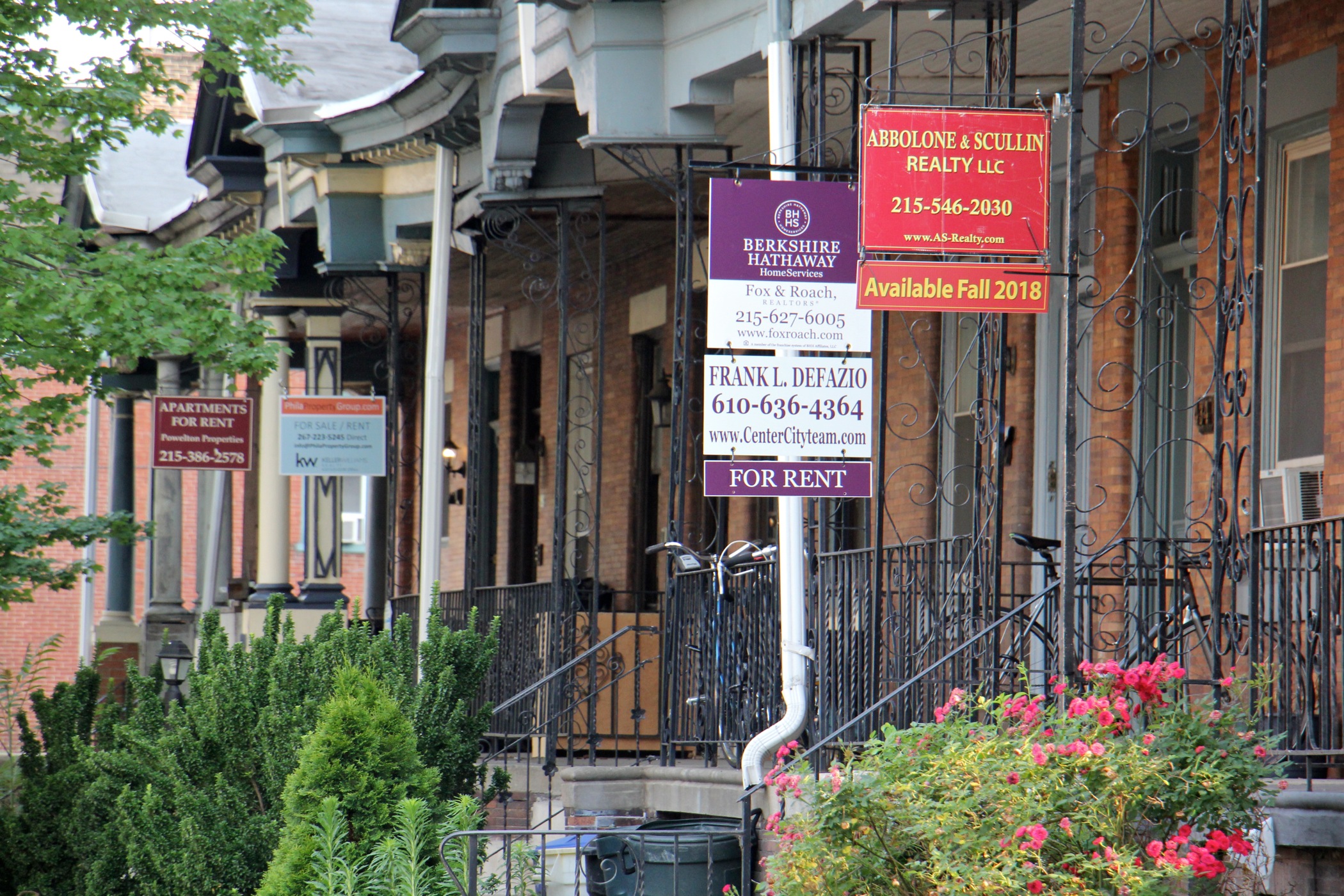
AI is fine until the computer loses the paper trail—and then the landlord owns the problem. Philadelphia owners can use software to respond faster and handle repetitive work, but if a maintenance request gets mangled or nobody can prove what the tenant reported, the efficiency play just became evidence in a habitability fight; keep a human in the loop and preserve the tenant’s original submission.

New York tried to call rent-setting software price-fixing, and a federal judge just put that law on ice—at least for now. That is a meaningful win for owners who use market data to price units, but it is not a free pass: RealPage already agreed to stop using non-public competitor data, and the underlying fight over algorithmic pricing is far from over.

Rental demand is not just hanging on—it is outrunning new supply, with 452,000 apartments absorbed in the first nine months of 2026 and national occupancy back up to 95.5%. But don’t read that as a rising-tide-for-everybody story: Class A is gaining rent while Class C is getting cut, so the investment lesson is simple—quality, location, and your basis matter more than a rosy national headline.

Philadelphia just turned rental compliance into an even bigger obstacle course. Effective November 1, the Safe Healthy Homes Act expands anti-retaliation rules, limits lease terminations and non-renewals to defined “good cause,” and adds more licensing, inspection, and tenant-organizing requirements; the lawsuit is still alive, but the judge declined to stop the law, so landlords should prepare now instead of betting the property on a court victory.
Philly Investor Tips
Get Your Rental Paperwork in Order. Now.
November 1 is coming, and things are about to get real. The Safe Healthy Homes Act takes effect November 1, 2026, bringing expanded tenant remedies and additional compliance obligations. Missing paperwork and unresolved violations can put your rent, your eviction case, and your money at risk.
Put all hands on deck to get your rental license active and your Certificate of Rental Suitability issued. If you have holds, find out exactly what is blocking you. Missing tax returns? Lead certification? Open violations? Get the accountant, contractor, property manager, or attorney involved and push those items through. An application sitting in eCLIPSE is not a finalized license.
Once cleared, obtain your Certificate of Rental Suitability and deliver the required documents and disclosures to your tenant. That includes the certificate, owner’s attestation, City handbook, voter-registration link, and applicable lead disclosures. Keep proof of delivery.

I covered the implications in “Why I Do Not Want ‘Safe Healthy Homes’”.
The clock is ticking. Get your licenses, certificates, disclosures, and delivery records lined up before November 1. Don’t wait until you need to enforce your lease to discover what’s missing.
Tenant Tales
Application Fraud Is Dead. For Now.
In 2025, we saw plenty of people submitting fake pay stubs, fabricated bank statements, and even fake IDs to get approved for rental properties. The paperwork looked good. The people behind it weren’t always who they claimed to be. It was a real problem, and screening an applicant increasingly felt like a contest to see who had the better technology.
Thankfully, the screening providers caught on and developed some really cool tools to fight back. Direct connections to payroll providers and banks, facial recognition, and ID scanning have made it a lot harder to manufacture a qualified applicant out of thin air. A convincing PDF doesn’t get you very far when we can verify the information directly at the source.
And I’m happy to say that so far in 2026, I don’t know of a single applicant who successfully slipped fraudulent information past our screening, only for us to discover it later. When we’ve seen attempted fraud, it’s been flagged and the application denied. After what we dealt with in 2025, it’s been remarkably quiet on the fraud front.
For right now, things seem pretty buttoned up. But I doubt the bad actors have all decided to get honest jobs and turn over a new leaf. What’s their next move?
Closing Thoughts

|
PROUDLY SPONSORED BY
|