*Technically, it was my second-largest client. Sorry for the clickbait.
Last month, Otter Property Management was fired by one of our largest clients. We parted ways amicably. It was one of those “it’s not you, it’s me” breakups, except the more honest version is probably this:
It was us.
That is painful to admit. But anything else is really just cope.
When property management is done well, the manager almost disappears into the background. Rent comes in. Bills get paid. Maintenance gets handled. The owner receives money in their bank account. The investment wheels keep spinning.
That is especially true for larger portfolios. Over enough units, the law of averages can work in your favor. One vacancy is offset by other occupied units. One repair bill is offset by other properties running smoothly.
One bad month does not ruin the year.
But that is the theory.
In practice, one bad tenant placement can damage an owner relationship faster than almost anything else.
That was the first and most painful lesson from losing this client.
A Bad Tenant Placement Can Destroy Years of Cash Flow
In Philadelphia, a bad tenant placement is not just a missed rent payment. It can become a full investment event.
Here is rough napkin math using an average rental in our portfolio at about $1,400/month.
Cost Item | Estimated Cost |
|---|---|
7.7 months of unpaid rent before lockout | $10,780 |
Legal fees/court costs for eviction | $2,500 |
Property damage after lockout | $6,000 |
30-day turnover vacancy | $1,400 |
30 days to find a new tenant | $1,400 |
New leasing fee | $1,400 |
Total estimated loss | $23,480 |
The 7.7 months reflects the average time from a missed first payment to a completed lockout in Philadelphia. This article discusses how I arrived at that figure.
That is about $23,500 on a single $1,400/month rental.
And even that number understates the damage.
Because owners do not keep gross rent. After mortgage payments, taxes, insurance, repairs, vacancy, utilities, management fees, reserves, and turnover, the actual owner cash flow might only be a few hundred dollars per month.
So the real question is not:
“How many months of rent did I lose?”
The real question is:
“How many years of actual investment profit did I lose?”
Here is what that looks like.
Monthly Owner Cash Flow | Time Needed to Rebuild a $23,480 Loss |
|---|---|
$150/month | 13.0 years |
$250/month | 7.8 years |
$350/month | 5.6 years |
$500/month | 3.9 years |
That is the real damage.
A bad tenant placement does not just put an owner behind a few months. On a normal Philadelphia rental, it can wipe out 5 to 10 years of actual cash flow.
And if you think about the opportunity cost, it gets worse. That $23,500 could have paid down debt. It could have funded repairs. It could have stayed in reserves. It could have gone toward the next acquisition. It could have simply remained invested.
Instead, it gets consumed by the eviction machine.
That is why I say a bad tenant placement can be catastrophic. You might have been better off putting money under your mattress and losing 10% of it than owning a rental property after one truly bad tenant placement.
The Risk Is Real
For this owner, we placed several tenants. Some were good. A few were not.
That is embarrassing to write.
We can dig into the files, review the applications, audit the screening process, and try to identify what we missed. We do that. We have done that. We will keep doing that.
But there is also an uncomfortable truth about being a landlord in Philadelphia:
There is inherent tenant risk.
In certain neighborhoods, with certain classes of rentals, even good screening does not reduce the risk to zero. It never has. It never will.
If you are renting a high-end unit in Society Hill or Rittenhouse, yes, you can usually get that risk much lower. But for many C-class rentals in Philadelphia, there is an inherent risk that a meaningful percentage of tenants will become major problems.
In my experience, that number is around 10% for the type of housing we manage.
Roughly 10% of placements may turn into serious collection, compliance, damage, or eviction problems despite reasonable screening.
For the client who left us, the numbers were worse than that. If we placed 11 tenants and 3 turned into duds, that is not sustainable.
I can tell the owner there should be regression toward the mean. I can tell him our overall tenant placement record is strong. I can tell him we manage hundreds of units and have seen the data across a large portfolio.
But none of that matters much when he is living through three ugly placements.
At that point, the relationship starts to break.
And that is the bigger lesson:
A property manager’s relationship with an owner is only as strong as the tenants sitting inside that owner’s properties.
What We Changed
We have overhauled our screening process.
In 2025, we started seeing more fraud in tenant applications. Fake pay stubs. Fake income documents. AI-assisted documents. Photoshopped IDs. Application packets that looked legitimate on first review but fell apart under deeper verification.
We adjusted.
We now rely more heavily on direct income verification through payroll providers and bank-account connections. We added better ID verification tools. We are scrutinizing application documents more closely. We are asking more questions. We are slowing down.
Most importantly, we are being pickier.
Applications are down. Approvals are down. Vacancy may run longer. Owners may feel the pain of waiting for a better applicant.
But in Philadelphia, the cost of being wrong is worse than the cost of being vacant.
City Council is really not clocking this.
When rules make it harder, slower, and more expensive to remove a nonpaying or destructive tenant, housing providers do not simply absorb that risk and move on. They respond rationally. They get more conservative. They screen harder. They accept fewer borderline applicants. They tolerate more vacancy rather than take on risk they cannot unwind.
That may not be the intended result. But it is the obvious result.
The Lesson
I lost one of my largest clients.
There were probably other issues too. If he wrote this article, I am sure he could identify a few things we should have done better. That is fair.
But the catalyst was tenant placement. A couple of bad placements started the unraveling.
That is what made the relationship hard to save.
And whether you are a property manager or an owner managing your own rentals, the lesson is the same:
Your investment is more fragile than it feels.
That $200 or $300 a month of positive cash flow feels good when it comes in. But one bad placement can destroy years of it.
Screening will make or break your entire relationship and investment.
Philadelphia Rental Market Data


Real Estate News & Events

With Philly’s new property assessments hitting mailboxes, your 2027 tax bill could be in for a major jump. Don’t get caught off guard—use Otter Property Management’s free property tax assessment calculator to see exactly where you stand relative to other properties and find out if it’s time to file an appeal!
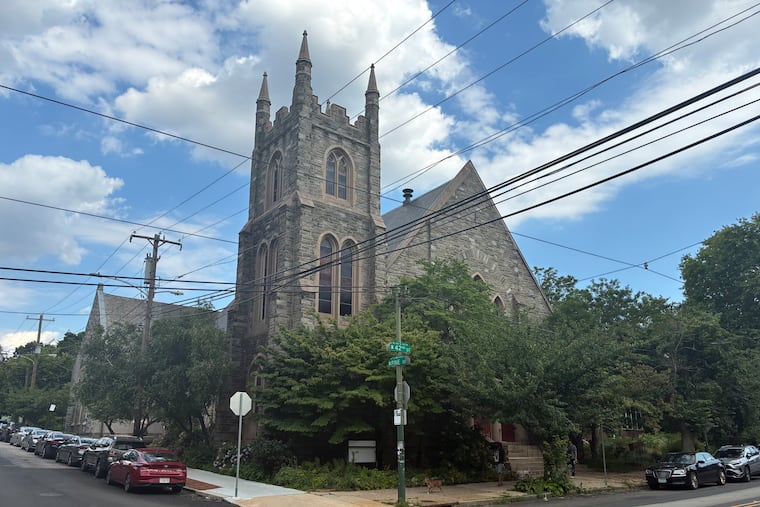
The old Woodland Presbyterian Church at 42nd and Pine is officially getting flipped into 35 apartments after Penn decided the rehab was too pricey to take on themselves. It’s a win for keeping the historic building standing. A lot, if not most, of new residential inventory coming online in 2026-2027 is conversion (as opposed to new construction)
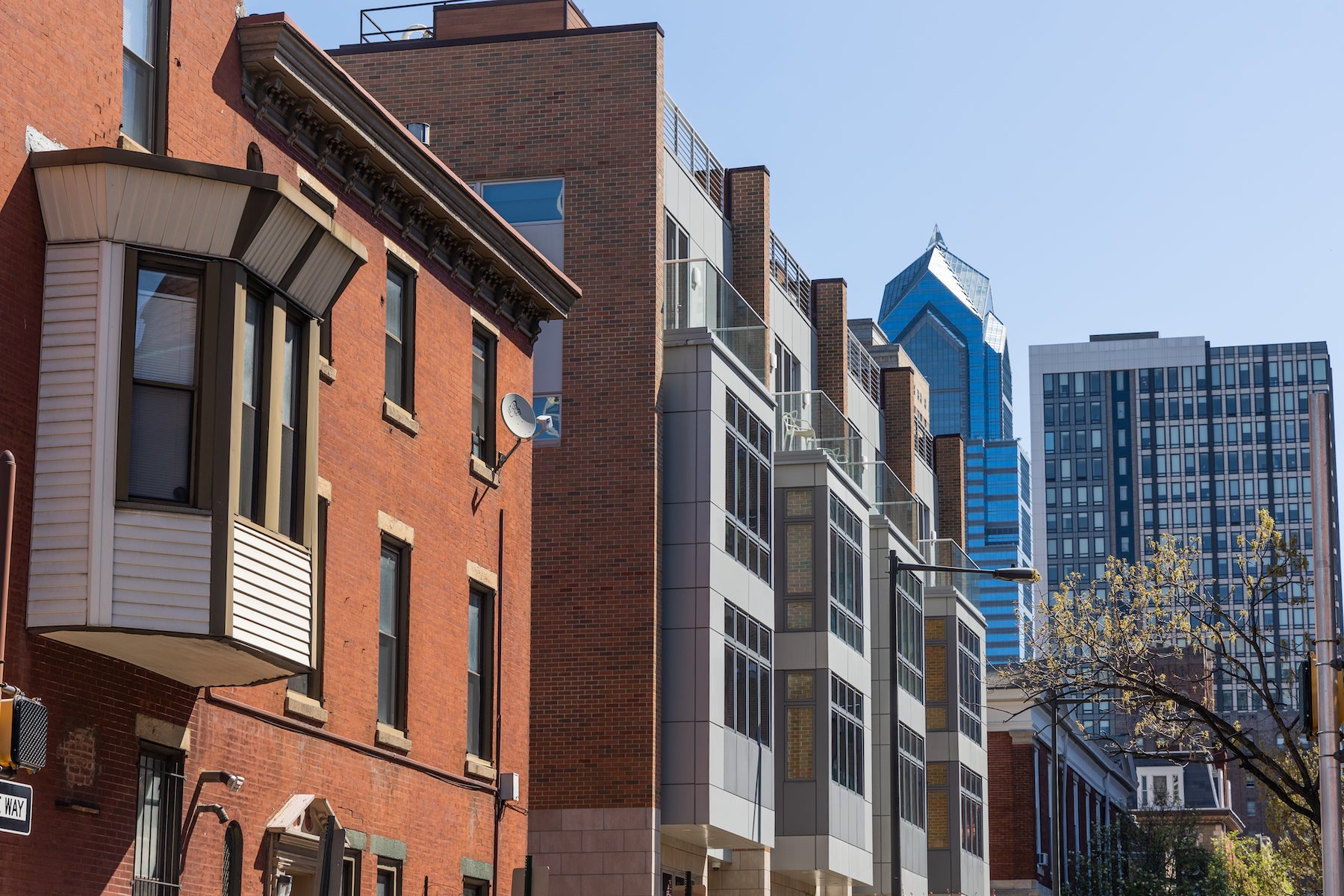
Philly’s housing market is in a weird spot where it technically looks like a buyer's market, but high prices and interest rates are still making it a nightmare for most people to actually close a deal. Economists are basically saying don't hold your breath for things to get better anytime soon, as it’ll likely take years for the market to really find its balance again.
Philly Investor Tips
Install the Blinds
This is one of the simplest rental property upgrades owners still push back on.
Install blinds.
At Otter, we regularly recommend installing basic blinds before listing a vacant rental. The response from owners is often some version of:
“Are they really necessary?”
Yes.
They are necessary enough that, in most cases, you should just do it.
Basic blinds typically cost somewhere around $80 to $100 per window, sometimes less depending on the property and window size. For a few hundred dollars, you can improve the way the property shows, protect the vacancy, and make the home feel more move-in ready.
That is a good return.
First, blinds make the interior feel finished. Fresh blinds create a cleaner, newer, more complete look when a prospective tenant walks through the property. A vacant unit with bare windows can feel cold, unfinished, and neglected. A vacant unit with fresh blinds feels like someone actually prepared the home for the next resident.
That matters.
Second, blinds help the property photograph and show better. Rental decisions are often made quickly. Prospects are not walking through with a contractor’s eye. They are reacting to whether the place feels clean, safe, private, and ready. Blinds help create that feeling.
Third, blinds help hide the vacancy from the outside.
This is especially important in Philadelphia. You do not want every passerby knowing that a property is sitting vacant with no one living inside. Bare windows advertise vacancy. They make it easier for people to see appliances, copper lines, tools, materials, or other items inside the property.
Fresh blinds do not make a vacant property theft-proof, but they do help obscure what is going on inside. That alone is worth something.
Fourth, blinds help with temperature control. In the summer, they can reduce direct sunlight and help keep the property cooler during showings. In the winter, they add a small layer of insulation and privacy. They are not a full energy-efficiency upgrade, but they help.
Fifth, tenants want them. Window coverings are one of those small conveniences that make a rental feel more livable on day one. The tenant does not have to immediately run out, measure windows, buy blinds, and install them after moving in.
And if a tenant damages them beyond ordinary wear and tear, the cost can generally be charged back at the end of the lease.
So from an owner’s perspective, this should be an easy decision.
For a relatively small upfront cost, blinds can:
Improve listing photos
Make the property feel cleaner and more move-in ready
Increase privacy during showings
Hide vacancy from the exterior
Reduce the visibility of appliances and materials inside
Help with sunlight and temperature control
Give tenants one less thing to worry about after move-in
This is not a luxury upgrade.
It is a low-cost leasing and vacancy-protection tool.
If your rental property is vacant and the windows are bare, install the blinds.
Tenant Tales
Tenant Tails: The Animals Left Behind
The last two eviction lockouts we handled had something in common that was hard to shake.
In both cases, the tenants knew the sheriff was coming. They had time to remove their belongings. They took what was valuable. They cleared out the properties.
But they left animals behind.
At one property, two dogs were left inside with the back door wide open so they could wander in and out. No food was left for them.
At another property, a cat was left behind with only a bowl of food and water.
Three animals, in two lockouts, abandoned at the very end.
There is a part of the rental housing conversation that people often avoid. Not every bad outcome is caused by the system, the landlord, the court, or a lack of notice. Sometimes people make reckless, selfish decisions. Sometimes those decisions hurt the people around them. Sometimes they even hurt innocent animals who had no role in the dispute.
Eviction is already an ugly process. No one involved should pretend otherwise. But there is something especially bleak about someone packing up their own belongings and leaving a dog or cat behind to be discovered by the next person through the door.
Housing policy often talks in broad categories: landlords, tenants, advocates, courts, enforcement. Real life is messier. Some people do their best in hard circumstances. Others simply walk away from their responsibilities.
These were not just lockouts. They were reminders that character still matters, even at the end of a tenancy.
Closing Thoughts

Your 2027 Property Assessment valuations have been posted. See the overall results and movement here.
|
PROUDLY SPONSORED BY
|