I’m a landlord-tenant attorney in Philadelphia, and over the last year one issue has become impossible to ignore: getting the Sheriff’s Department to execute lockouts has become chaotic, slow, and opaque.
I know evictions are not an easy subject to talk about. They are uncomfortable, emotional, and often involve real hardship. But lawful possession enforcement is a necessary part of property rights, contract enforcement, and the rental system itself.
This is not about an owner unilaterally deciding that someone should be locked out. This is post-due process. By the time a lockout reaches the Sheriff’s Department, the case has already gone through court. A judge has heard the matter, considered the facts, and ruled that possession must be returned to the property owner.
That final step matters. Just like courts must uphold contracts and law enforcement must enforce lawful orders, a judgment for possession only means something if it is actually carried out. Without enforcement, the system starts to lose credibility.
And that is where Philadelphia is failing.
Under Pennsylvania’s writ process, this should be a 21-day post-judgment process: 10 days for the first writ, then 11 days for the alias writ before lockout.
In Philadelphia, that is not reality.
The Sheriff’s Department still requires writs to be mailed or hand-delivered. There is no online submission system. No tracking portal. No transparent queue. Writs get lost, emails go unanswered, and owners have no reliable way to know when a court order will actually be enforced.
After months of dealing with this, I asked the Sheriff’s Department for transparency. I requested their lockout list. They refused. So I hit ‘em with a formal Right-to-Know request.
The data I received was alarming.
From delinquency through completed lockout, Philadelphia owners are waiting an average of 7.7 months. The fastest 20 percent of cases still take about 5.3 months. The slowest 20 percent take about 9.2 months.
And the trend is getting worse. From March 2025 to March 2026, faster cases slowed by 16 days, average cases slowed by 22 days, and slower cases slowed by 34 days.
For small property owners, an eight or nine-month wait can be financially devastating. Mortgage payments, taxes, insurance, utilities, repairs, and legal fees continue while rent is not being paid and possession has not been returned.
The Sheriff’s own data proves it: a process that should take weeks is now taking most owners closer to eight months. And it’s getting worse.
Check out my video below to learn more about the implications of this issue, why these delays matter for Philadelphia property owners, and my thoughts on how the city can improve the efficiency and accountability of the justice process.
Philadelphia Rental Market Data

May DOM month-to-date is down 29% from last year. Rental inventory is moving faster. I’m feeling it. Leasing has been easier than the recent past. Optimism is in the air.

Median leads per listing per day are starting to dip a little bit in May. But still incredibly strong compared to last year. This is expected as we come out of tax return season. I expect we’ll keep this momentum through early fall.

April has moved our 12 mo trendline up for Average Apartment Rent. Average rent is up 2% over last year. Still below inflation- but the trend since November hints at continued upward pricing pressure for rents.
Real Estate News & Events
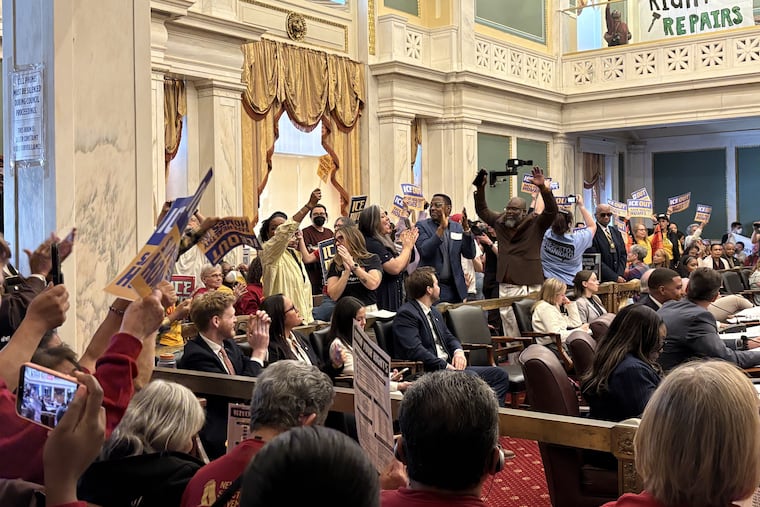
Mayor Parker made the Safe & Healthy Homes Act official. Goes into effect November 1st. You know I have problems with it.

$1.85M from the City of Philadelphia includes in new art installations from Mural Arts and improvements to the streetscape. Visitors and residents alike are enjoying new trees, freshly painted light and banner poles, restored transit headhouses, and refurbished bus shelters.
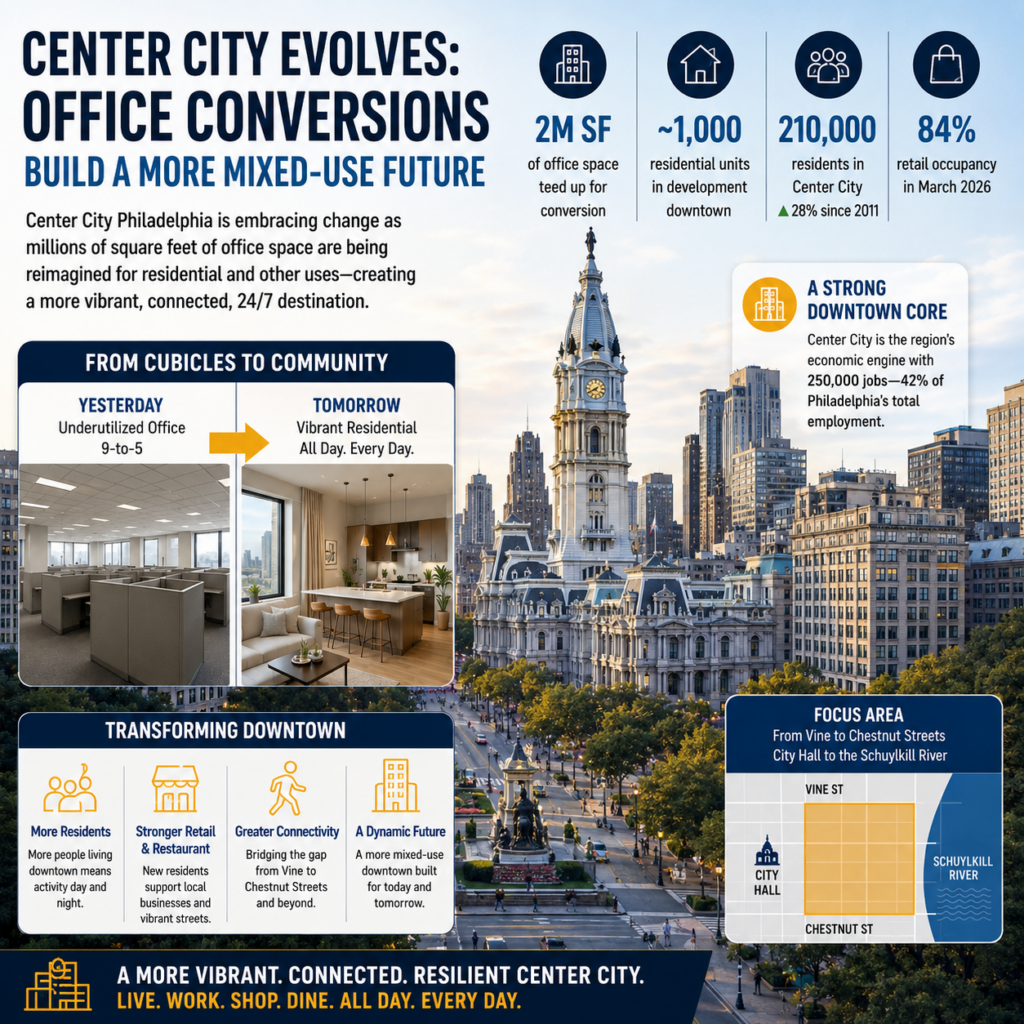
According to the latest “State of Center City” report, approximately 2 million square feet of office space is positioned for redevelopment. The report estimates that roughly 1,000 residential units are currently in development within the core business district.
Philly Investor Tips
Avoid Ejector Pumps Whenever Possible
If you are developing or renovating a rental property, avoid ejector pumps whenever you can.
If spending a little more, or even a moderately painful amount more, allows you to install a gravity-fed sewer drain instead, make it work.
Ejector pumps are one of those features that look fine on paper but often become a nightmare in practice. They clog, break, back up, flood basements, damage tenant belongings, and create sewage smells that nobody wants to deal with.
They are also expensive to diagnose and repair.
The biggest problem is tenant use. Over the years, I have seen ejector pumps clogged with dog hair, hygiene products, wipes, clothing, and even T-shirts. Then, when the system fails, tenants often do not believe they should be responsible, especially in multifamily properties where everyone points fingers.
Now you are not just dealing with plumbing. You are dealing with drama.
Gravity-fed drains are boring. Boring is good.
I would be very cautious about buying or developing properties with multiple lower-level units relying on ejector pumps. More pumps mean more failure points, more service calls, and more potential disputes.
Owner tip: spend the money upfront if you can. Avoid ejector pumps whenever possible.
Tenant Tales
The Retaliatory Pop-up Car Wash
Shortly after receiving a formal notice in the mail of my owner client's intent to evict for non-payment, one Philadelphia tenant decided it was time to respond.
Not with payment.
Not with a repayment plan.
Not with a phone call to resolve the issue.
No, this tenant allegedly fought back the only way a true visionary could: with a pop-up car wash on the side of the house.
The tenant politely informed the owner that, on the 17th of the month, they would be “starting a little Car Wash on the side of the house from the corner to the driveway from 9 to 5.”
Because nothing says “let’s de-escalate a landlord-tenant dispute” quite like soap, hoses, driveway traffic, and a full-day neighborhood production.
But don’t worry. This was not just any car wash.
There would also be “a little bit of music due to my artist for promotion.”
There would be “food, children, and people.”
And yes, cars would be “being Washed.”
The tenant also wanted to make clear that they had “all of the permits that I need as far as my vendors license and my LLC.”
So there you have it. The property may be in eviction proceedings, but the LLC is apparently in good standing.
The best part? The owner was not just informed. The owner was invited.
The tenant graciously added that if the owner, the owner’s family, or “anyone upstairs” wanted to participate, they were “more than welcome” and should “please come support.”
A touching gesture, really.
There are many laws protecting tenants from landlord retaliation when tenants assert their rights.
But this bubbles up a new question:
Where are the laws protecting property owners from retaliatory car washes when landlords assert their rights?
Closing Thoughts

|
PROUDLY SPONSORED BY
|